In this article
The short version
- Injections mean fewer doses and no transfer risk, but levels rise and fall between shots.
- Cream is a daily, needle-free routine, but it can rub off on partners and kids.
- In one 3-year review, thick blood was far more common on injections (66.7%) than gels (12.8%).
- Both can bring testosterone back into range, and labs confirm how well yours works.
- You can switch forms if one doesn't suit you.
Same hormone, two very different routines. One is a quick shot on a schedule. The other is a daily rub-in with no needles, plus a rule about hugging your kids.
Both can bring your testosterone back into range and help you feel like yourself again. The right one is the one you'll actually stick with. Here's how injections and cream compare on levels, convenience, side effects, and the transfer risk most men never hear about.
How each one works
Injections put testosterone cypionate, dissolved in oil, into muscle. It's absorbed slowly, and its half-life is about eight days. The brand-name label lists a dose every two to four weeks, and your clinician sets the schedule that fits your labs.
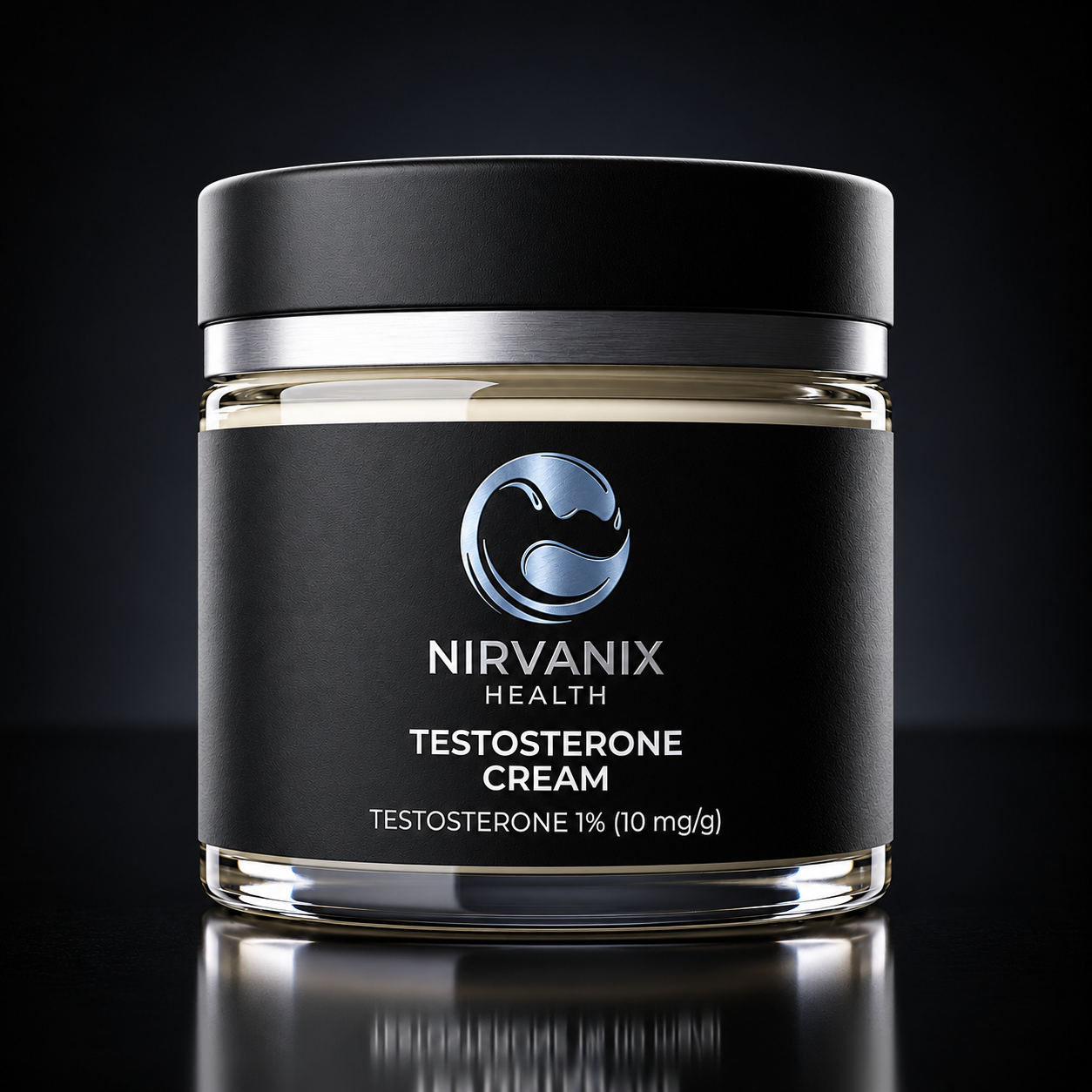
Cream delivers testosterone through your skin every day. You rub it in, let it dry, and go about your day.
Here's the everyday comparison. An injection is like filling a tank: levels rise after the shot and drift down before the next one. Cream is more like a drip that tops you up every morning.
Levels: peaks and dips vs daily top-ups
How your levels get checked depends on the form. The Endocrine Society recommends drawing blood midway between injections and changing the dose or schedule if that level is above 600 ng/dL or below 350 ng/dL. For gels, levels are checked 2 to 8 hours after applying, once you've used it for at least a week.
Skin absorption varies from man to man, so cream doses often need fine-tuning. Compounded creams can also absorb differently from the brand-name gels in the studies, which is why your follow-up labs matter even more.
Side effects: blood count and estrogen
A 3-year review compared men on gels, injections, and pellets. The biggest difference was in hematocrit, the measure of how thick your blood is:
- Injections: 66.7% of men had hematocrit above 50% at some point.
- Gels: 12.8% did.
- Pellets: 35.1% did.
Estrogen rose with every form, and more with injections and gels. One caution: the men on injections were younger and started with higher blood counts, so the forms weren't compared head to head.
Either way, the fix is the same. Hematocrit gets checked, and if it climbs too high, the dose comes down.
The transfer risk nobody mentions with creams
This is the trade-off that comes with any testosterone you rub on your skin. Testosterone gel labels carry a boxed warning, the FDA's strongest kind, because children have been exposed through skin contact with men using it.
In those children, doctors saw enlarged genitals, early pubic hair, more erections, and aggressive behavior. Most signs faded once the exposure stopped, but not all. Women can be affected too, with new hair growth or acne. In one reported case, shirts, towels, or sheets were considered a possible source.
The label's rules are simple:
- Wash your hands with soap right after applying. In one study, washing removed 96% of the testosterone left on the hands.
- Cover the area with clothing once it's dry, like a T-shirt.
- Wash the site before skin-to-skin contact. If someone touches unwashed skin, they should wash that spot right away.
- Keep it away from pregnant partners. Testosterone can harm a developing baby.
Follow the exact instructions from your pharmacy, since compounded creams and application sites can differ.
Convenience: what daily life looks like
Injections
- Fewer doses. No daily routine to remember.
- No transfer risk. Nothing on your skin to worry about with kids or a partner.
- Needles. Some men don't mind them. Some really do.
Cream
- No needles. Just rub it in.
- A daily habit. It works best when it's part of your morning routine.
- Timing rules. With gel, the label says to wait at least 2 hours before showering or swimming. Moisturizer or sunscreen on the site raised absorption a little in studies, so tell your clinician what you use.
Which one fits you?
Injections may fit better if you:
- Want fewer doses and don't mind a needle.
- Live with young kids or a pregnant partner and don't want any transfer risk.
Cream may fit better if you:
- Hate needles and like a simple daily routine.
- Have had a high hematocrit before, since gels raised it far less often in the review above.
Whichever you start with, you're not locked in. If one form doesn't suit you, your clinician can switch you to the other.
The bottom line
Injections give you fewer doses and no transfer risk, with more ups and downs between shots and a bigger effect on your blood count. Cream gives you a needle-free daily routine, with strict rules to protect the people you touch. Either way, labs and a clinician who adjusts your dose are what make it work.
Not sure which fits? Read about the side effects to watch on TRT, or take the two-minute quiz to see where to start.
Common questions
Is testosterone cream as effective as injections?
Both can raise testosterone into the normal range. How far each one raises yours depends on the dose and how well you absorb it, which is why your clinician checks your levels and adjusts. Compounded creams can absorb differently from the gels used in studies.
How often are testosterone injections given?
Your clinician sets your schedule. The brand-name label for testosterone cypionate lists a dose every two to four weeks, and the drug's half-life is about eight days. Your plan is based on your labs and how you feel.
Can my partner absorb my testosterone cream?
Yes. Testosterone on your skin can transfer through contact, and children exposed to testosterone gel have had early sexual development. Wash your hands, cover the area with clothing once it dries, and wash the site before skin-to-skin contact.
Which has fewer side effects, injections or cream?
In one long-term review, high hematocrit (thick blood) was much more common on injections than on gels, and estrogen rose with both. Cream carries a transfer risk that injections don't. Your history and labs help decide which fits you.
Can I switch from cream to injections?
Yes. If one form doesn't suit you because of convenience, side effects, or lab results, your clinician can switch you, adjust your dose, and recheck your levels after the change.