In this article
The short version
- Deep belly fat, called visceral fat, wraps around your organs and carries the most health risk.
- Two weeks of short sleep raised deep belly fat 11% in a lab study.
- Exercise trims visceral fat even when the scale doesn't move.
- In a tirzepatide body-scan study, estimated deep belly fat fell 40%, compared with 7% on placebo.
- There's no exercise that burns fat from one spot. Whole-body fat loss is what shrinks your waist.
You've lost weight before. Your face got thinner, your arms got smaller, and your belly barely budged. You're not imagining it.
Belly fat plays by its own rules. It responds to your sleep, your stress, your hormones, and your age, not just your calories. Here's why it sticks, and what the research says actually shrinks it.
Not all belly fat is the same
There are two kinds of fat around your middle:
- Subcutaneous fat sits just under your skin. It's the soft layer you can pinch.
- Visceral fat sits deep inside, packed around your liver, intestines, and other organs. You can't pinch it.
Think of subcutaneous fat as a coat you wear, and visceral fat as packing material stuffed around everything inside the box. The packing material is the bigger problem. Fat around the middle is linked with a higher risk of disease, including heart disease and type 2 diabetes.
The good news: deep belly fat tends to respond well once you start losing fat and moving more.
Reason 1: You're not sleeping enough
This one surprises people. In a 2022 sleep study, healthy adults spent two weeks in a lab, once with normal sleep and once sleeping only about 4 hours a night.
On short sleep, they ate about 308 more calories a day. Their total body fat barely changed, but their belly fat didn't wait. Fat inside the belly rose about 11%, and total belly fat rose about 9%. Short sleep didn't just add fat. It sent it straight to the middle.
Reason 2: Stress keeps it locked in
Cortisol is your main stress hormone. In a study of 59 women, those who carried more fat around the middle released more cortisol under repeated stress. The leaner women with belly fat kept pumping out extra cortisol even after the stress became familiar.
That study shows a link, not proof that stress causes belly fat. But it fits what many people notice: hard, stressful stretches tend to show up around the waist.
Reason 3: Hormones and age shift where fat goes
As the years add up, your body tends to burn a little less, and fat storage drifts toward the middle.
- For women, menopause is a turning point. In a four-year study, every woman gained some fat under the skin, but only those who went through menopause had a significant rise in deep belly fat. Their estrogen fell, and their energy use during sleep dropped more than in women who hadn't reached menopause.
- For men, hormones matter too. If you've got stubborn belly fat along with low energy and low drive, it may be worth having your testosterone checked. Our guide to low testosterone symptoms covers the signs, and our men's health page explains how testing works.
What actually moves belly fat
Here's what the research supports:
- Lose fat overall. There's no exercise that pulls fat from one spot. Crunches build your core, but your waist shrinks as you lose fat everywhere.
- Move, even if the scale is stubborn. A review of 117 studies found that without any weight loss, exercise was linked to about 6% less visceral fat. Dieting without weight loss did almost nothing (about 1%). Exercise tended to cut deep belly fat more than diet did, even though diet moved the scale more.
- Protect your sleep. Aim for a full night, most nights. Keep the same wake time, even on weekends.
- Lower the stress load where you can. Walks, training, time outside, and fewer late nights can all help.
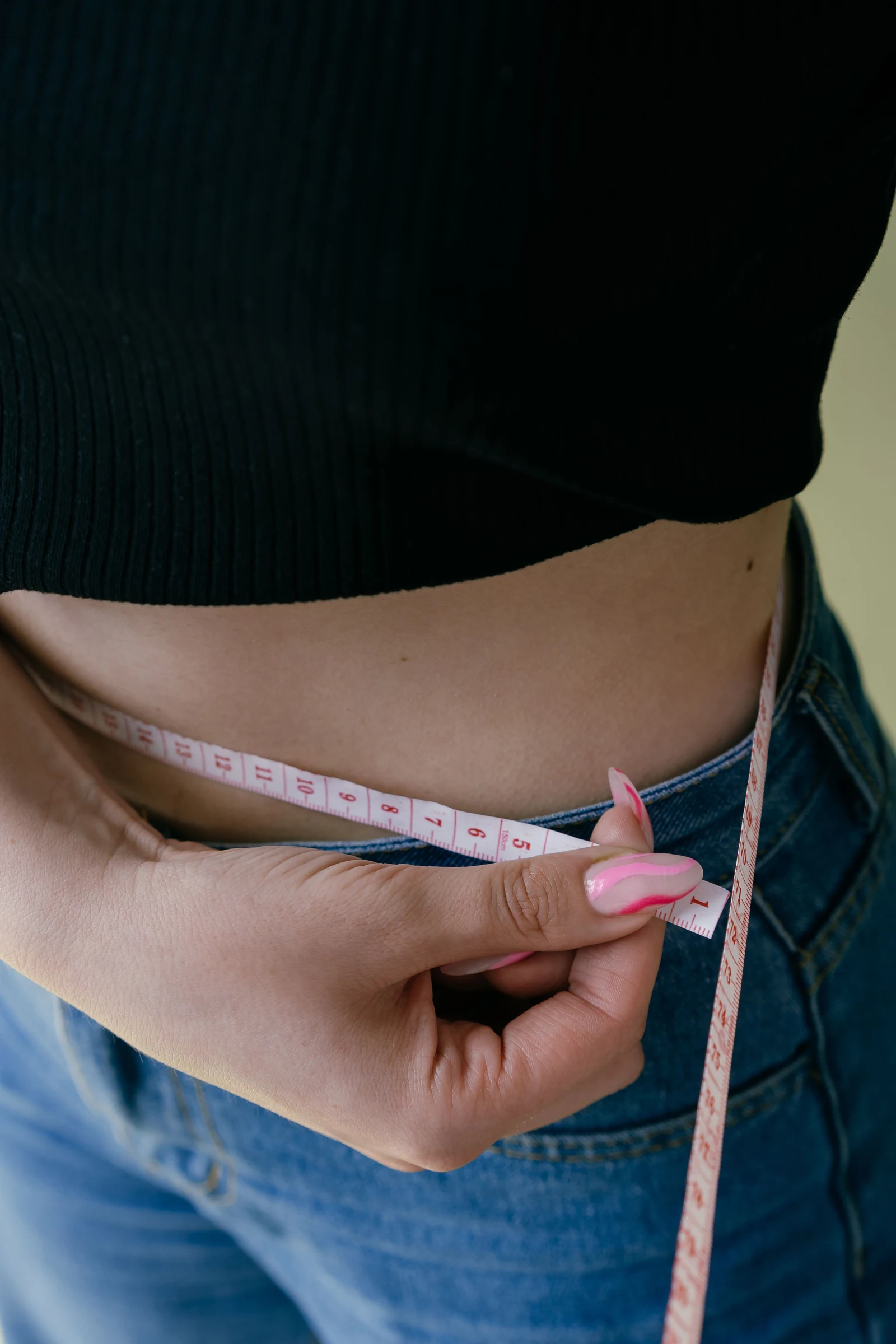
- Measure your waist, not just your weight. Use a tape measure at the top of your hip bones once a month.
What GLP-1 medicine does to belly fat
For many people, those habits help but don't finish the job. That's where medicine can change the picture.
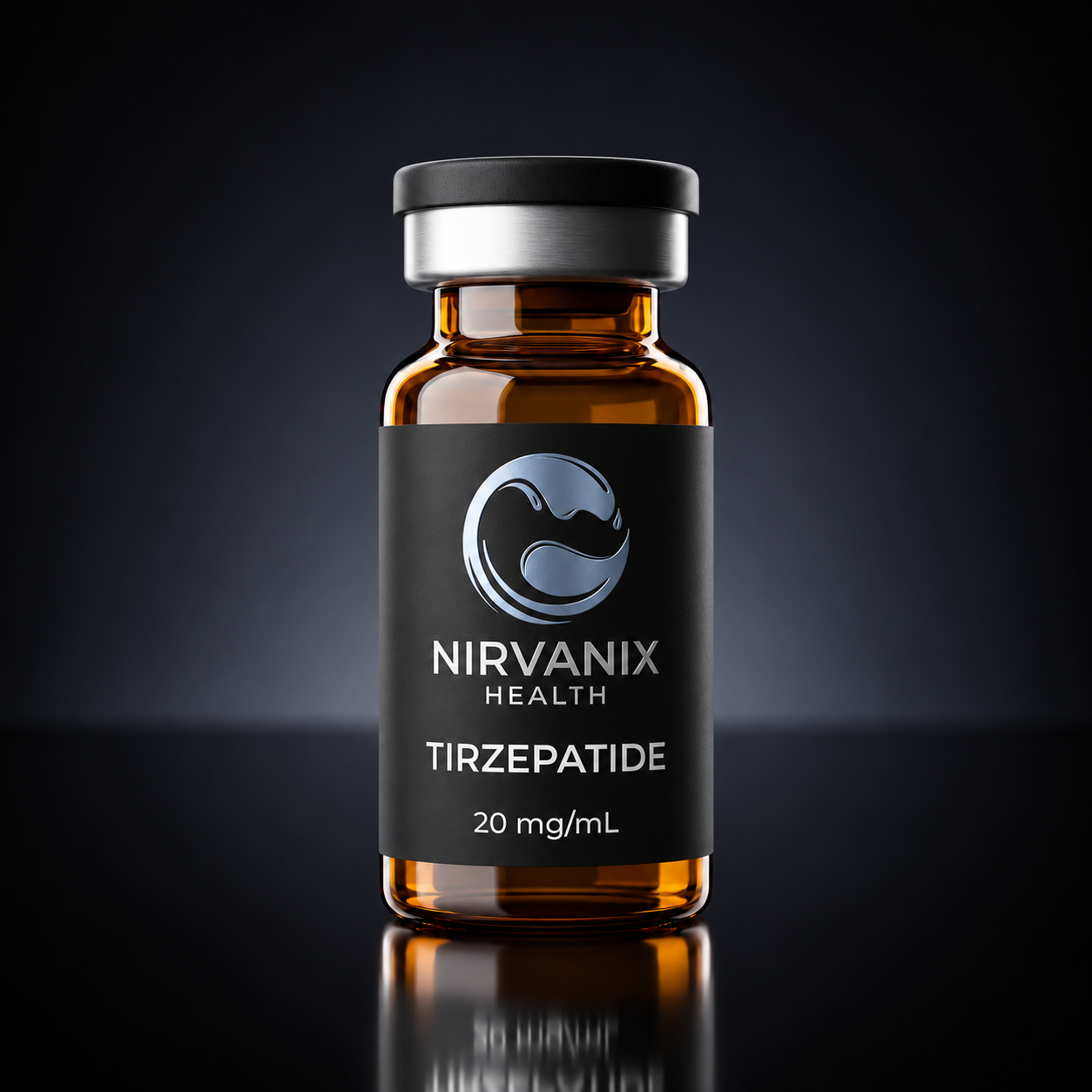
In a body-scan study inside the main tirzepatide trial, researchers tracked 160 people for 72 weeks. People on tirzepatide lost an average of 21% of their body weight and about 34% of their body fat. Their estimated visceral fat fell about 40%. People on placebo lost about 7%.
How does it work? Tirzepatide copies two gut hormones that tell your brain you're full, so you eat less without white-knuckling it. Less food over time means less stored fat. In this study, deep belly fat dropped even faster than fat overall: about 40% versus 34%.
The study estimated visceral fat from the scans rather than measuring it directly, and results vary from person to person. Still, it's one of the clearest signs that GLP-1 medicine reaches the fat that matters most.
How Nirvanix helps
Nx Lean pairs tirzepatide with a real clinician who reviews your health history, starts you at a low dose, and adjusts your plan as you go. It's online, with no waiting room, and the consultation is included. Pair it with lifting and protein, which we cover in how to keep muscle on a GLP-1, and you're working on belly fat from every side.
The bottom line
Belly fat is stubborn because sleep, stress, hormones, and age all push fat toward your middle. Overall fat loss, regular exercise, and better sleep are what move it. For people who need more help, tirzepatide cut estimated deep belly fat by about 40% in its main body-scan study.
Ready to go after it? Take the two-minute quiz to see where to start.
Common questions
Why is belly fat so hard to lose?
Belly fat responds to more than calories. Short sleep, stress hormones, falling estrogen around menopause, and age all push your body to store fat around the middle. It usually comes off with overall fat loss, but often later than you'd like.
What is visceral fat?
Visceral fat is the deep fat packed around your liver, intestines, and other organs. You can't pinch it. It's linked with higher risks of heart disease and type 2 diabetes, which is why shrinking it matters for more than looks.
Can you lose belly fat with crunches?
Crunches strengthen your core, but they don't burn fat from your belly specifically. Fat comes off your whole body as you lose weight. Regular exercise is what helps cut deep belly fat, even before the scale moves.
Does tirzepatide reduce belly fat?
In a body-scan study inside the main tirzepatide trial, estimated visceral fat fell about 40% over 72 weeks, compared with about 7% on placebo. Results vary, and the study used the FDA-approved medicine, not a compounded version.
How do I measure belly fat at home?
Wrap a tape measure around your waist at the top of your hip bones, snug but not tight, after you breathe out. Measure at the same time of day once a month. A shrinking waist is a simple sign that belly fat is going.