In this article
The short version
- In the main study, people lost an average of 15% to 21% of their body weight, depending on the dose.
- On the top dose, 57% of people lost at least 20%.
- Tirzepatide copies two gut hormones that tell your brain you're full.
- Side effects are mostly stomach-related, mostly mild, and mostly early.
- People who stay on it keep their results. People who stop tend to regain.
Tirzepatide is the medicine behind some of the biggest weight-loss numbers ever seen in a drug study. In its main trial, more than half of the people on the top dose lost at least 20% of their body weight.
If you're wondering what it is, how it works, and whether it could work for you, this is your guide. Plain words, real numbers, no hype.
What is tirzepatide?
Tirzepatide is a once-a-week injection for weight loss and type 2 diabetes. The FDA-approved brands are made by Eli Lilly:
- Zepbound, approved for weight loss and keeping it off, and for moderate to severe sleep apnea in adults with obesity.
- Mounjaro, approved for type 2 diabetes.
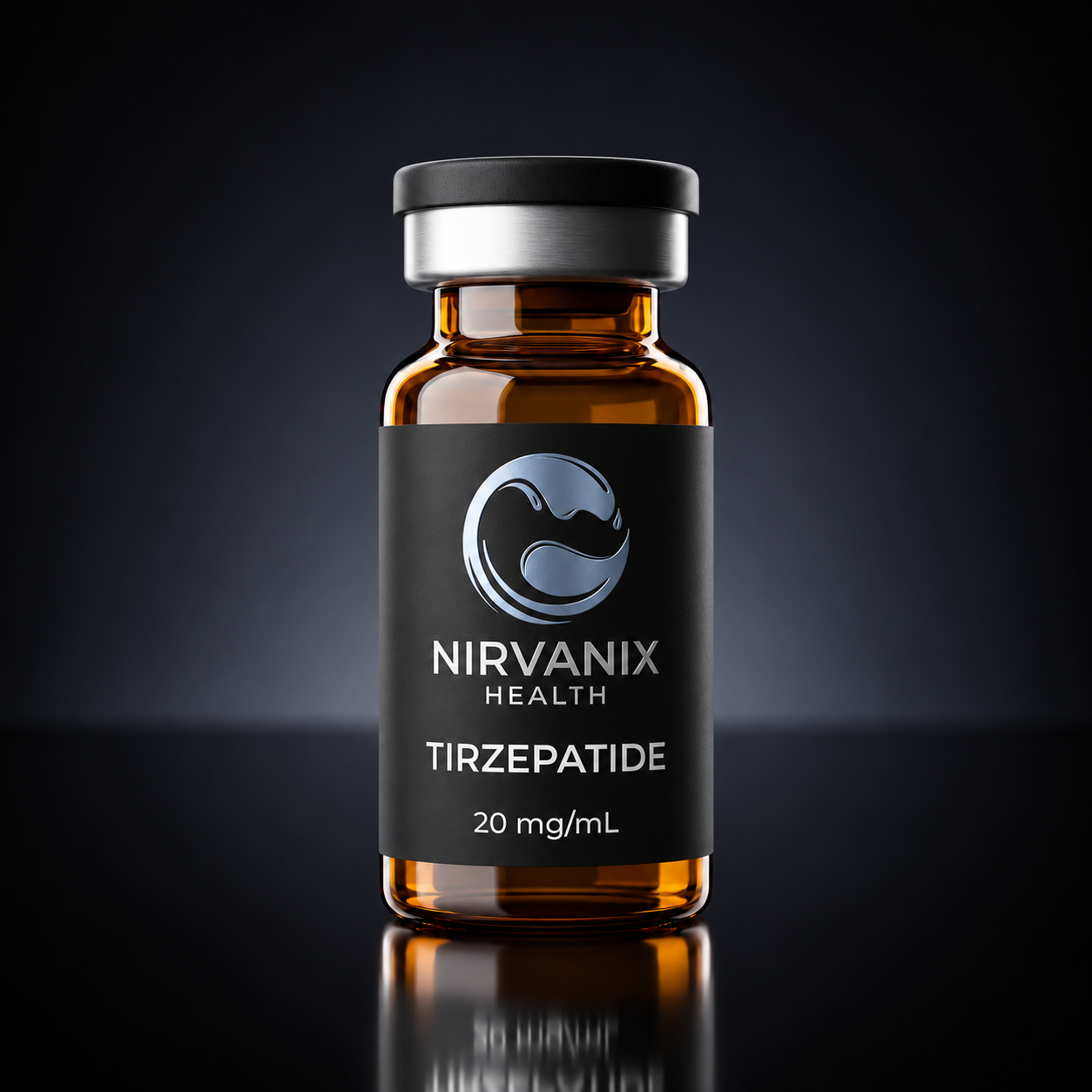
Nirvanix prescribes compounded tirzepatide, which is different. More on that below.
How it works: two fullness signals in one shot
After you eat, your gut releases hormones that tell your brain you've had enough. Tirzepatide copies two of them, GLP-1 and GIP.
- It turns down hunger. Both hormones act on the parts of your brain that control appetite, so many people find they eat less without white-knuckling it.
- It slows your stomach. Food leaves your stomach more slowly, so you feel full sooner and stay full longer.
- More of the loss is fat. The label notes people lose more fat than lean mass on tirzepatide.
Think of hunger as a volume knob that's been stuck on high. Tirzepatide turns it down.
What the studies found
The biggest study, SURMOUNT-1, followed 2,539 adults with obesity, or overweight plus a weight-related health problem, for 72 weeks. Everyone got diet and exercise advice.
For someone starting at the study's average of about 231 pounds, the top-dose average works out to about 48 pounds. And the results lasted: in people with prediabetes who stayed on tirzepatide for three years, average loss held at 12.3% to 19.7%, depending on the dose. Only 1.3% of them developed type 2 diabetes, compared with 13.3% on placebo.
Who it's for
Zepbound is approved for adults with obesity (a BMI of 30 or more), or with overweight (a BMI of 27 or more) plus at least one weight-related health problem, like high blood pressure, high cholesterol, sleep apnea, or heart disease. It's meant to go with a reduced-calorie diet and more activity.
It's not for everyone. Tirzepatide shouldn't be used by people who:
- Have a personal or family history of medullary thyroid cancer or a condition called MEN 2.
- Have had a serious allergic reaction to tirzepatide.
- Are pregnant. Stop if you become pregnant, and tell your clinician about pregnancy plans or breastfeeding.
It's also not recommended for people with severe gastroparesis, and people taking insulin or a sulfonylurea need their diabetes doses reviewed.
Side effects, in plain words
Most side effects are stomach-related: nausea, diarrhea, constipation, and sometimes vomiting. They're usually mild, show up early and after dose increases, then fade. In the main study, 4 to 7 in every 100 people on tirzepatide stopped because of side effects, compared with about 3 in 100 on placebo.
Get the full rundown, including what helps, in our guide to tirzepatide side effects.
How to get the best results
- Climb slowly. Treatment starts at 2.5 mg a week and steps up every 4 weeks or more. Patience means fewer side effects.
- Eat protein at every meal. It keeps you full and helps protect muscle as you lose.
- Lift twice a week. Strength training helps you keep the muscle you want.
- Stay on your plan. In SURMOUNT-4, people who kept taking tirzepatide lost even more, while people switched to placebo regained much of their weight within a year.
- Ask questions before you start. Here are the questions to ask before starting a GLP-1.
Getting tirzepatide through Nirvanix
Nirvanix is physician-led online care, with no waiting room. A licensed clinician reviews your health history and, if tirzepatide fits, starts you at 2.5 mg a week and adjusts your plan as you go. The consultation and shipping are included. You can choose from:
- Nx Lean: a weekly tirzepatide injection.
- Lean Balance: a tirzepatide troche that dissolves in your mouth, for people who'd rather skip needles.
- Accelerate & Thrive: a plan that pairs tirzepatide with NAD+. Adding NAD+ hasn't been shown to boost weight loss.
The bottom line
Tirzepatide helped people in its main study lose an average of 15% to 21% of their body weight, and more than half on the top dose lost at least 20%. It works by turning down hunger, side effects are mostly mild and early, and the best results come to people who stay on their plan.
Wondering if it's right for you? Take the two-minute quiz.
Common questions
How fast does tirzepatide work?
Many people notice their appetite change in the first weeks. Weight loss builds as the dose climbs: in one major study, people lost an average of 20.9% of their weight in the first 36 weeks on 10 or 15 mg.
Is tirzepatide the same as Ozempic?
No. Ozempic is semaglutide, which copies one gut hormone, GLP-1. Tirzepatide copies two, GLP-1 and GIP. In a head-to-head study, tirzepatide led to more weight loss: 20.2% versus 13.7% for semaglutide.
How long do you have to take tirzepatide?
For many people, it's long term. In a major study, people who stopped regained much of their weight within a year, while people who kept taking it continued to lose. Your clinician will plan this with you.
Is compounded tirzepatide FDA-approved?
No. Compounded tirzepatide is prepared by a licensed pharmacy for each patient. It isn't FDA-approved, and it isn't a generic version of Zepbound or Mounjaro.
Who shouldn't take tirzepatide?
People with a personal or family history of medullary thyroid cancer or MEN 2, anyone who's had a serious allergic reaction to it, and people who are pregnant. It's not recommended with severe gastroparesis. Your clinician reviews your full history first.