In this article
The short version
- Everyone starts at 2.5 mg once a week for 4 weeks. It's a starter dose, not a long-term one.
- Doses go up by 2.5 mg, after at least 4 weeks on each step, to a maximum of 15 mg.
- The slow climb helps your stomach adjust and lets each dose fully build up in your body.
- Many people stay at 5 or 10 mg. More isn't always better.
- Missed a dose? Take it within 4 days, or skip it and stay on schedule.
Those headline tirzepatide results, like an average 21% weight loss on the top dose, didn't happen on day one. They came from a slow, steady climb.
In every major study, people started at 2.5 mg a week and stepped up every 4 weeks. Here's the exact schedule from the FDA label, why patience pays off, and what each step tends to feel like.
The standard step-up schedule
This is the schedule on the Zepbound label, shown at the fastest pace it allows. Each step lasts at least 4 weeks, and your clinician may keep you on a step longer.
- Weeks 1 to 4: 2.5 mg. The starter dose. It's for getting your body used to the medicine, not for long-term weight management.
- Weeks 5 to 8: 5 mg. The first dose that can also be a long-term dose.
- Weeks 9 to 12: 7.5 mg, if you're moving up.
- Weeks 13 to 16: 10 mg. Another common long-term dose.
- Weeks 17 to 20: 12.5 mg, if you're moving up.
- Week 21 onward: 15 mg. The maximum weekly dose.
For weight loss, the label lists 5 mg, 10 mg, and 15 mg as long-term doses. For sleep apnea, it's 10 or 15 mg.
Why it starts so low and goes so slow
Two reasons, and both work in your favor.
Your stomach needs time. Tirzepatide slows how fast food leaves your stomach. The label notes this effect is strongest after the first dose and eases over time. Starting low and stepping up slowly is how the label reduces the risk of nausea and other stomach side effects.
Each dose needs time to build up. Tirzepatide lasts a long time in your body; it takes 5 to 6 days to clear half a dose. With weekly shots, levels keep building until they level off after about 4 weeks.
Picture filling a bathtub with the drain partly open. The water rises for a while, then settles at a steady level. Each new dose step takes about 4 weeks to settle at its new level, which lines up with the 4-week minimum per step.
What to expect at each step
- At 2.5 mg, many people notice they feel full sooner. Mild nausea or a heavy, full feeling is common in the first days.
- At 5 mg, the appetite effect often gets stronger. In the main study, people who stayed on 5 mg lost an average of 15% of their body weight over 72 weeks.
- At 7.5 to 10 mg, weight loss usually keeps building. People on 10 mg averaged 19.5%.
- At 12.5 to 15 mg, you're at the top of the range. People on 15 mg averaged 20.9%.
After each increase, a few days of extra queasiness is normal, then things usually settle again. Here's how to handle side effects.
Do you have to go all the way to 15 mg?
No. The label tells clinicians to weigh how well you're responding and how you feel when choosing your long-term dose. If a dose is too hard on you, a lower one is an option.
The numbers back that up. In the main study, the average difference between 10 mg and 15 mg was small (19.5% versus 20.9%). And about 4 to 7 in every 100 people on tirzepatide stopped because of side effects, compared with about 3 in 100 on a placebo. The best dose is the one that works and that you can stay on.
Missed a dose or need a new injection day?
- Missed it by 4 days (96 hours) or less? Take it as soon as you can, then go back to your usual day.
- Missed it by more than 4 days? Skip it. Take the next dose on your regular day.
- Want to change your injection day? That's fine, as long as there are at least 3 days (72 hours) between doses.
- Where to inject: your belly, your thigh, or the back of your upper arm if someone else is giving the shot. Rotate spots each week.
- When: any time of day, with or without food.
Tell your clinician at every step
- If you use birth control pills. They may work less well for 4 weeks after you start and for 4 weeks after each dose increase. Use a backup method or switch to a non-pill option.
- If you take insulin or a sulfonylurea for diabetes. Your clinician may need to lower those doses to prevent low blood sugar.
- If you have surgery coming up. Tell your surgical team you take tirzepatide, since it slows stomach emptying.
- If side effects aren't easing. You don't have to push through; your dose can stay put or step back.
Your clinician sets your dose
This schedule is the label's roadmap, not a rule you follow on your own. Your clinician sets your dose and decides when it changes, based on your results and how you feel.
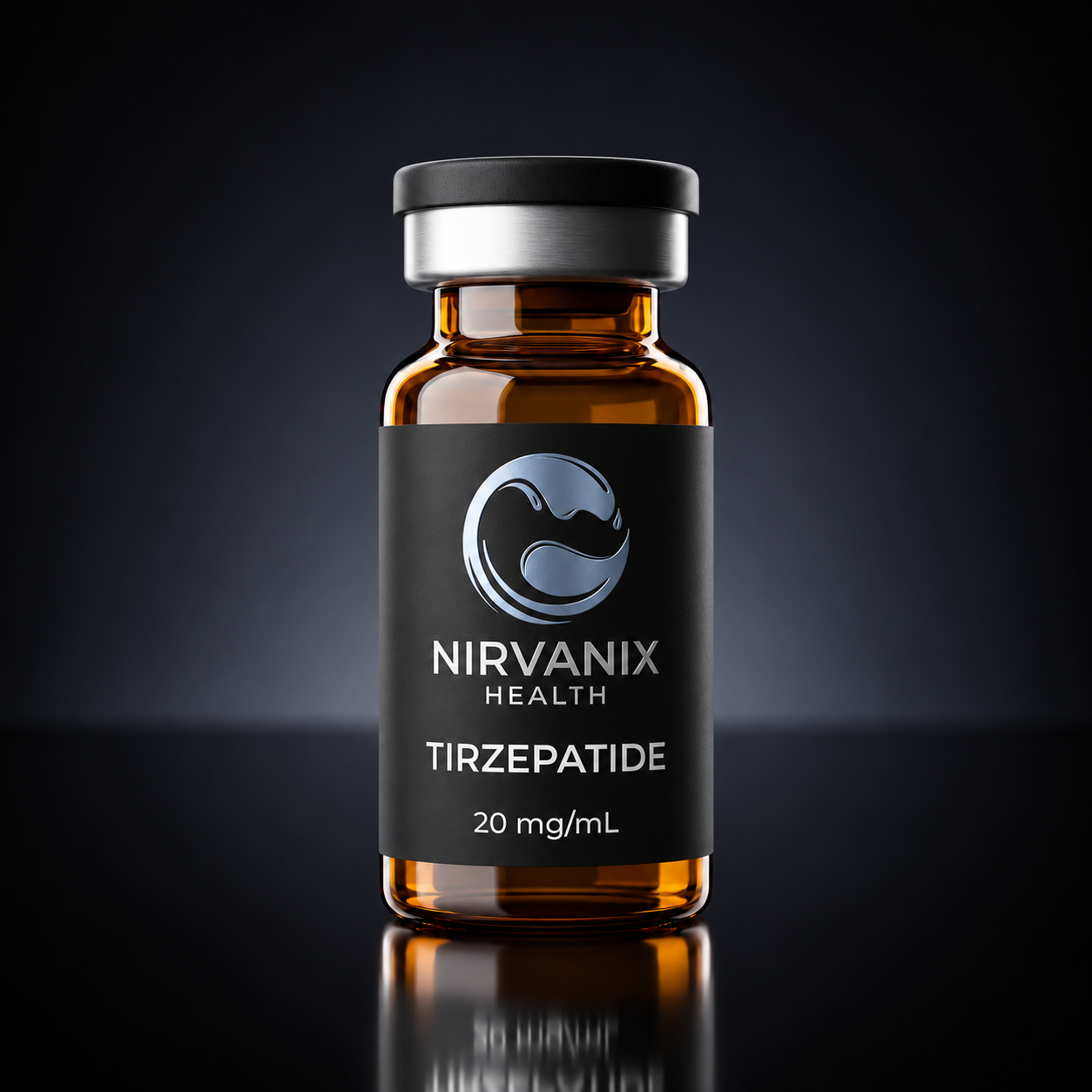
That matters even more with compounded tirzepatide. Its strength per milliliter can differ from brand-name pens, so the amount you draw up depends on your vial. FDA has received reports of side effects tied to dosing mistakes with compounded GLP-1s, some serious enough for a hospital visit. Always follow your prescription and pharmacy label exactly, and ask if anything is unclear.
At Nirvanix, a licensed clinician reviews your health history online, starts you at 2.5 mg a week, and moves you up only when you're ready. Your care team can hold or lower your dose anytime, and the consultation and shipping are included.
The bottom line
Tirzepatide starts at 2.5 mg a week and climbs by 2.5 mg every 4 weeks or more, up to 15 mg. The slow pace helps your stomach adjust and gives each dose time to build. Wondering what results look like along the way? See how much weight people lose, month by month.
Ready to start at the right dose? Take the two-minute quiz.
Common questions
What is the starting dose of tirzepatide?
2.5 mg injected once a week for 4 weeks. The label is clear that 2.5 mg is for getting started, not a dose to stay on for weight management.
How long should I stay on each tirzepatide dose?
At least 4 weeks. Many people stay longer on a dose if they're still adjusting to side effects or if it's working well. Your clinician decides when to move up.
What is the maximum dose of tirzepatide?
15 mg once a week. The recommended long-term doses for weight management are 5 mg, 10 mg, or 15 mg, depending on how you respond and how you feel.
What if I miss a tirzepatide dose?
If it's been 4 days (96 hours) or less, take it as soon as you can. If it's been more than 4 days, skip it and take your next dose on your usual day. Never take two doses to catch up.
Can my tirzepatide dose go back down?
Yes. If a higher dose is too hard on your stomach, the label suggests considering a lower maintenance dose. Your clinician can step you back down.