In this article
The short version
- NAD+ is a helper molecule your cells need to turn food into energy and repair DNA.
- Studies of human skin and blood show NAD+ levels fall as people age.
- A 6-hour NAD+ IV raised blood levels 398%. At-home shots skip the long drip.
- Big trials on energy and focus haven't been done yet, so treat NAD+ as support, not a sure thing.
- IV drips that run too fast can cause cramping and nausea. A clinician sets your dose.
Dragging by 3 p.m.? Brain fog that coffee can't touch? That's exactly why NAD+ injections have taken off. NAD+ is a molecule your cells use to turn food into energy, and your levels fall as you age.
People want a way to top it back up. Here's what NAD+ does, why people inject it, what the studies really show, and how a shot compares with a nasal spray.
What NAD+ does in your body
NAD+ (short for nicotinamide adenine dinucleotide) is a helper molecule inside every cell. Your mitochondria, the tiny engines in your cells, use it to turn the food you eat into usable fuel.
It's also spent by enzymes that repair damaged DNA. Think of NAD+ as a rechargeable battery your cells pass back and forth all day. Making energy charges and drains it, and repair work uses some up for good.
Why your NAD+ drops with age
In a study of skin samples from 49 people aged newborn to 77, NAD+ levels fell with age in both men and women. At the same time, DNA damage rose, and so did the activity of a repair enzyme that burns through NAD+.
Blood tells a similar story. In healthy adults aged 20 to 87, older people had lower NAD+ in their blood. So as you age, your cells do more repair work with a shrinking supply.
That's the logic behind NAD+ therapy: if levels fall, put more back.
Why people use NAD+ injections
People turn to NAD+ shots hoping to:
- Get their energy back, especially that mid-afternoon crash.
- Think more clearly, with less fog and better focus.
- Support healthy aging by keeping cellular fuel topped up.
- Skip the IV chair. A shot at home takes a minute instead of hours.
What the research shows
Here's what studies have actually measured:
- IV NAD+ raises blood levels, slowly. In a pilot study, 8 healthy men got 750 mg of NAD+ through an IV over 6 hours. Blood NAD+ didn't budge for the first 2 hours, then was up 398% by the end. A lot of it showed up in urine.
- Oral building blocks raise NAD+ too. In a 6-week trial of adults aged 55 to 79, nicotinamide riboside (a building block your body turns into NAD+) raised NAD+ in blood cells by about 60%. It was well tolerated, but it didn't change fitness or motor function.
- What's still missing: large, placebo-controlled trials showing NAD+ shots improve energy, focus, or aging in people. Published human data on at-home shots are scarce, and there aren't published human trials of NAD+ nasal spray yet.
So the honest summary is this: NAD+ clearly matters, levels clearly drop, and giving NAD+ clearly raises blood levels. Whether that makes you feel more energetic is the part still being studied.
Injection vs. nasal spray vs. IV
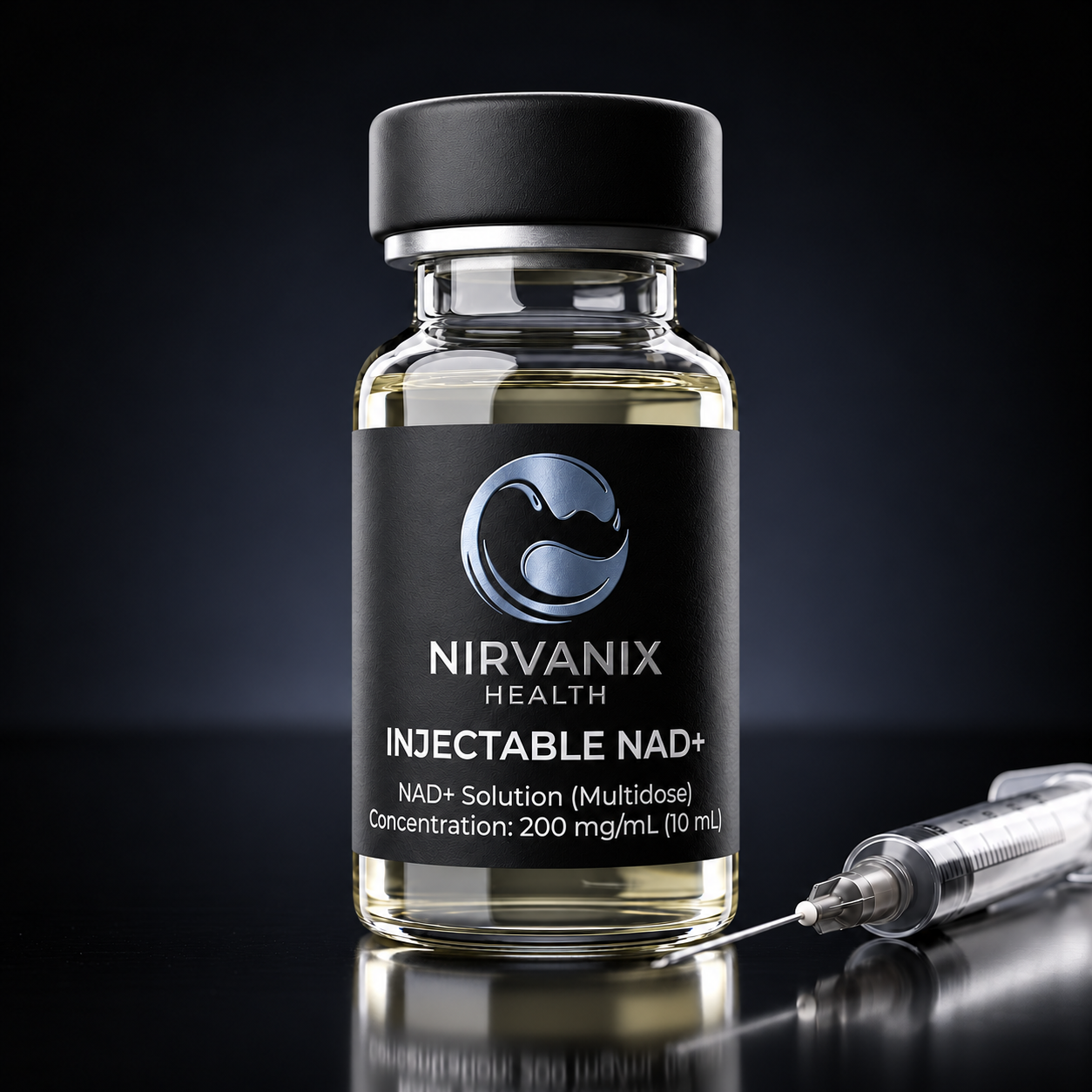
- Injection (Nx Renew): A quick shot at home. No IV line and no hours in a clinic chair.
- Nasal spray (Clarity): No needles at all. It's the most convenient option, and also the least studied.
- IV drip: Delivers large doses but takes time. In one 2026 clinic study, 500 mg drips averaged about 97 minutes because people had to slow them down.
NAD+ side effects
- Injection-site reactions. Like any shot, NAD+ can leave a sore, red, or slightly swollen spot.
- Symptoms when it goes in too fast. In that 2026 clinic study, all six people getting NAD+ by IV had symptoms during the drip, such as stomach cramping, nausea, diarrhea, or chest pressure. They stopped as soon as the drip ended, and people slowed the rate to cope.
- Lab changes were small. Neither study found clinically important changes in liver or other blood tests.
- Long-term effects are unknown. No long-term safety studies exist yet.
How Nirvanix does NAD+
First, a quick fact: no NAD+ product is FDA-approved. NAD+ injections and sprays are compounded, which means a licensed pharmacy prepares them for each patient. FDA lists NAD+ among the substances it has "under evaluation" for pharmacy compounding.
A Nirvanix clinician reviews your health history and what you want to feel, then decides whether NAD+ fits and which form makes sense. If it's prescribed, a licensed pharmacy prepares it and ships it to you. Your clinician sets your dose, checks in, and can change the plan. The consultation is included.
The bottom line
NAD+ fuels your cells, and levels fall as you age. IV NAD+ raises blood levels, and oral building blocks do too, but big trials on energy and focus are still to come. If you want to try it, an at-home shot or nasal spray with a clinician setting the dose is the simplest way to start.
Want to see if NAD+ fits your goals? Take the two-minute quiz.
Common questions
What do NAD+ injections do?
They deliver NAD+, a molecule your cells use to make energy and repair damage, directly into your body instead of through your gut. People use them hoping for more energy, sharper focus, and healthy aging. Studies show NAD+ given by IV raises blood levels, but large trials on how people feel are still missing.
How long do NAD+ injections take to work?
There's no proven timeline. In an IV study, blood NAD+ didn't rise for the first 2 hours of a slow drip, then was up 398% by the end. How you feel varies, so your clinician checks in and adjusts your plan.
Are NAD+ injections better than NAD+ pills?
They work differently. Pills usually contain building blocks your body turns into NAD+, and one of them, nicotinamide riboside, raised NAD+ in blood cells by about 60% in a 6-week trial. Injections deliver NAD+ itself, and they haven't been compared head to head with pills.
What are the side effects of NAD+ injections?
The most common issue with any shot is soreness, redness, or a small bump where the needle went in. When NAD+ is given by IV too fast, people can get stomach cramps, nausea, or chest pressure, which ease when the drip slows or stops. Tell your care team about anything that bothers you.
Is NAD+ nasal spray as good as injections?
A nasal spray is needle-free and easy, which is why people like it. But there aren't published human trials yet showing how much NAD+ a spray delivers or what it does for energy and focus. Your clinician can help you decide which form fits you.