In this article
The short version
- Zepbound and Mounjaro are the only FDA-approved tirzepatide products. Compounded tirzepatide is not FDA-approved and isn't a generic.
- Compounding boomed during the 2022 to 2024 shortage. FDA declared the shortage over in December 2024.
- Licensed pharmacies can still compound tirzepatide for an individual patient, under stricter rules that keep evolving.
- The big weight-loss numbers come from studies of the FDA-approved medicine.
- A good provider uses a real clinician, a named licensed pharmacy, clear dosing, and honest claims.
Tirzepatide is the weight-loss medicine everyone wants right now, and the results explain why: in its main study, people lost an average of 15% to 21% of their body weight in 72 weeks.
But there are two very different ways to get it: the brand-name medicine from the drugmaker, and compounded tirzepatide made by a licensed pharmacy. Here's what actually separates them, why so many people choose compounded, and the checks that tell a trustworthy provider from a risky one.
First, what are Zepbound and Mounjaro?
Zepbound and Mounjaro are Eli Lilly's brand names for tirzepatide, and they're the only FDA-approved tirzepatide products.
- Mounjaro was approved in 2022 for type 2 diabetes.
- Zepbound was approved in 2023 for weight loss and keeping it off in adults with obesity, or with overweight plus a weight-related health problem. It's also approved for moderate to severe sleep apnea in adults with obesity.
Before either reached a pharmacy, FDA reviewed the clinical trials, the factory, and the label. That review is the core difference.
What compounded tirzepatide is
Compounding means a licensed pharmacy prepares a medicine for an individual patient's prescription.
Think of it like food. A brand-name drug is a packaged product: the recipe, the factory, and the label were checked by FDA before it hit the shelf. A compounded medicine is more like a dish a licensed kitchen makes to order. State pharmacy boards and federal law regulate the kitchen, but FDA didn't review that exact dish for safety, effectiveness, or quality before it was served.
So compounded tirzepatide is not FDA-approved, and it isn't a generic version of Zepbound or Mounjaro.
How compounded tirzepatide took off
Demand for tirzepatide outran supply, and FDA put it on the national drug shortage list in December 2022. During a shortage, federal law gives pharmacies more room to make versions of a drug that's hard to get. Compounded tirzepatide spread fast.
FDA first said the shortage was resolved in October 2024. After a lawsuit, it looked again and confirmed the decision in December 2024. Compounders then got short grace periods, which ended in early 2025.
Where the rules stand in late 2026
Here's the current picture, in plain words:
- Tirzepatide isn't in shortage. That means compounders can't copy it the way they could before.
- State-licensed pharmacies can still compound it for an individual patient's prescription. They can't regularly make copies of an approved drug, unless the prescriber documents that a change makes a significant difference for that patient, like a dose or form the brand doesn't come in.
- Large outsourcing facilities face a tighter door. In May 2026, FDA proposed keeping tirzepatide off the list of ingredients these facilities may compound from bulk. When we checked, a final decision hadn't been published.
- Marketing is under a microscope. In March 2026, FDA sent 30 warning letters to telehealth companies, citing marketing that implied compounded GLP-1s were FDA-approved or equal to brand-name drugs.
- Safety reports are being tracked. As of May 2026, FDA had received more than 730 adverse event reports tied to compounded tirzepatide, some linked to dosing mistakes. FDA notes that reports are likely undercounted.
What's uncertain: the rules, court cases, and enforcement are still moving. Any provider you choose should be able to explain how they follow the current ones.
What's actually different
- FDA review. The brand was reviewed before it reached you. Compounded tirzepatide wasn't.
- The evidence. The famous results all come from trials of the FDA-approved medicine. No large trials have tested compounded versions.
- Who makes it. The brand comes from FDA-inspected plants. Compounded tirzepatide comes from a state-licensed pharmacy, and quality depends on that pharmacy and where it buys its ingredients.
- Dose and form. The brand comes in set doses from 2.5 mg to 15 mg. A compounded prescription can be prepared in other strengths or forms, like a troche, when a clinician documents a reason.
- Cost and coverage. Insurance coverage for weight-loss medicine varies widely, and compounded plans are usually self-pay. Compare the full cost, including visits and follow-up.
Why people choose compounded tirzepatide
- Their insurance won't cover weight-loss medicine, and they want one clear plan instead.
- They want care bundled in. A clinician who reviews their health, sets the dose, and adjusts it.
- They need something the brand doesn't offer, like a specific dose step or a no-needle form, and their clinician agrees it makes a difference for them.
7 things to check before you start
- A licensed clinician actually reviews you. FDA calls it a red flag when a company doesn't require screening and a prescription from a licensed clinician.
- The pharmacy is named and state-licensed. You should know who makes your medicine and how to reach them.
- It's a real prescription. Never buy tirzepatide labeled "for research use" or "not for human consumption."
- Dosing is crystal clear. Your dose should be in milligrams, with instructions for exactly how much to draw up. Many reported problems came from measuring mistakes.
- Someone answers when you feel sick. You need a care team that can slow your dose increases.
- The claims are honest. Walk away from anyone calling a compounded drug "FDA-approved" or "generic Zepbound."
- The price is clear upfront. FDA warns about deals that seem too good to be true.
How Nirvanix does it
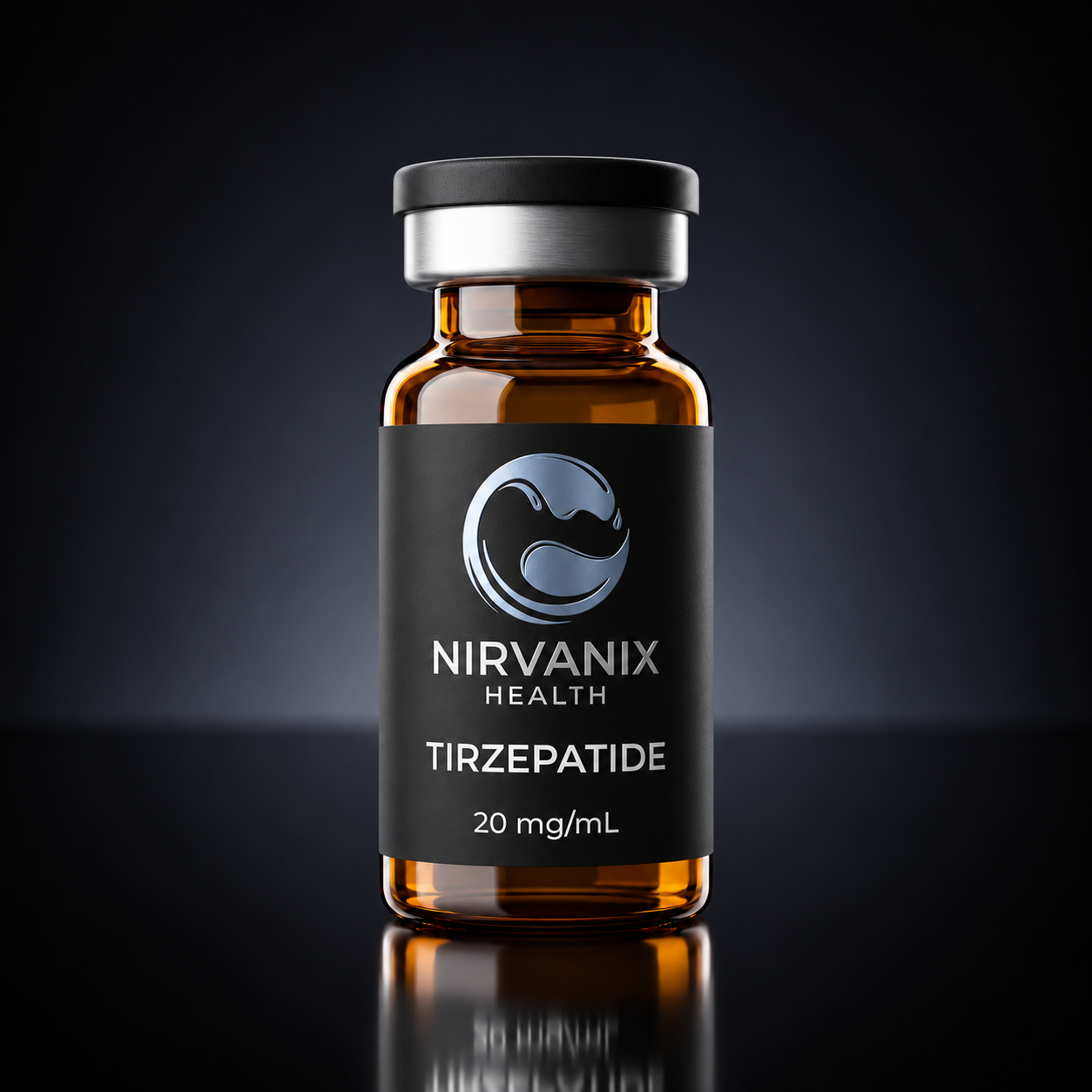
Nirvanix is a physician-led online practice, founded by a board-certified emergency physician. A licensed clinician reviews your health history before anything is prescribed. Your plan starts at 2.5 mg a week and steps up only when you're ready, and your care team can adjust it if you have a rough week. The medicine comes from a licensed compounding pharmacy, and the consultation and shipping are included.
Your clinician can also talk with you about FDA-approved options, and prescribes a compounded medicine only when it's legally allowed and right for your situation.
The bottom line
Compounded tirzepatide isn't Zepbound, and anyone who says it is shouldn't be trusted. It can still be a legitimate path to the medicine when a real clinician prescribes it, a licensed pharmacy prepares it, and someone stays with you through every dose change. Want to know about side effects first? Read what's normal on tirzepatide.
Ready to see if it fits you? Take the two-minute quiz.
Common questions
Is compounded tirzepatide the same as Zepbound?
No. Zepbound is an FDA-approved medicine made by Eli Lilly. Compounded tirzepatide is prepared by a licensed pharmacy for an individual patient's prescription. It isn't FDA-approved, and it isn't a generic version of Zepbound or Mounjaro.
Is compounded tirzepatide still legal in 2026?
Yes, within limits. A state-licensed pharmacy can compound it for an individual patient's prescription, but it can't regularly make copies of an approved drug unless the prescriber documents that a change makes a significant difference for that patient. The rules and their enforcement are still changing, so ask your provider how they follow them.
Does compounded tirzepatide work as well as Zepbound?
No large studies have compared them. The well-known results, like an average loss of 15% to 21% of body weight, come from trials of the FDA-approved medicine. Your clinician tracks how you respond and adjusts your plan.
Can I switch from Zepbound to compounded tirzepatide, or back?
Talk with your clinician first. Doses and concentrations can differ, so your clinician needs to pick your dose. Never take two tirzepatide products at the same time.
Why do people choose compounded tirzepatide?
Common reasons include insurance that won't cover weight-loss medicine, wanting one plan that bundles the clinician and the medicine, and needing a dose or form the brand doesn't come in. Your clinician decides whether it fits your situation.