In this article
The short version
- Two full-body sessions a week is enough to start getting stronger.
- Just 30 to 60 minutes of lifting a week is linked to a 10% to 20% lower risk of early death.
- Dieters who lifted kept more lean mass and got about 19% stronger.
- Machines, dumbbells, and bands all work. You don't need to train to failure.
- Add weight when you can do 12 clean reps on every set.
Losing weight feels great. Losing weight and looking strong, tight, and capable feels even better. That's what lifting does.
You don't need a fancy gym, a coach, or hours a week. Here's a simple plan for total beginners, including people losing weight on a GLP-1 medicine and men on testosterone therapy.
Why lifting is the best thing you can add to your results
Strength training isn't just for bodybuilders. It's one of the most useful habits you can build for how you look, feel, and age.
- It's linked to a longer life. In a review of 16 long-term studies, muscle-strengthening activity was tied to a 10% to 17% lower risk of early death, heart disease, cancer, and diabetes. The biggest drop showed up at about 30 to 60 minutes a week.
- It protects your muscle while you lose weight. In a 2017 study of older adults on a diet, everyone lost about 9% of their weight. The cardio-only group lost 5% of their lean mass. The groups that lifted lost just 2% to 3%, and their strength jumped 18% to 19%.
- It makes everyday life easier. A 2026 review of 137 earlier reviews, covering more than 30,000 people, found that lifting improves strength, muscle size, balance, walking speed, and everyday physical function.
How much you actually need
Less than you think. US guidelines recommend muscle-strengthening work at least two days a week, hitting all the major muscle groups: legs, hips, back, belly, chest, shoulders, and arms.
The newest exercise science position stand from the American College of Sports Medicine has good news for beginners:
- Two to three sets per exercise, at least two sessions a week, helped build strength.
- Full range of motion beat half reps.
- Doing strength work early in your session helped strength gains.
- Training to total failure, fancy set schemes, and the type of equipment didn't consistently change results.
Translation: machines, dumbbells, bands, and your own bodyweight all work. You don't need to leave every set gasping on the floor.
Your beginner plan: two full-body days a week
Do this on two non-back-to-back days, like Monday and Thursday. Each session takes about 30 to 40 minutes.
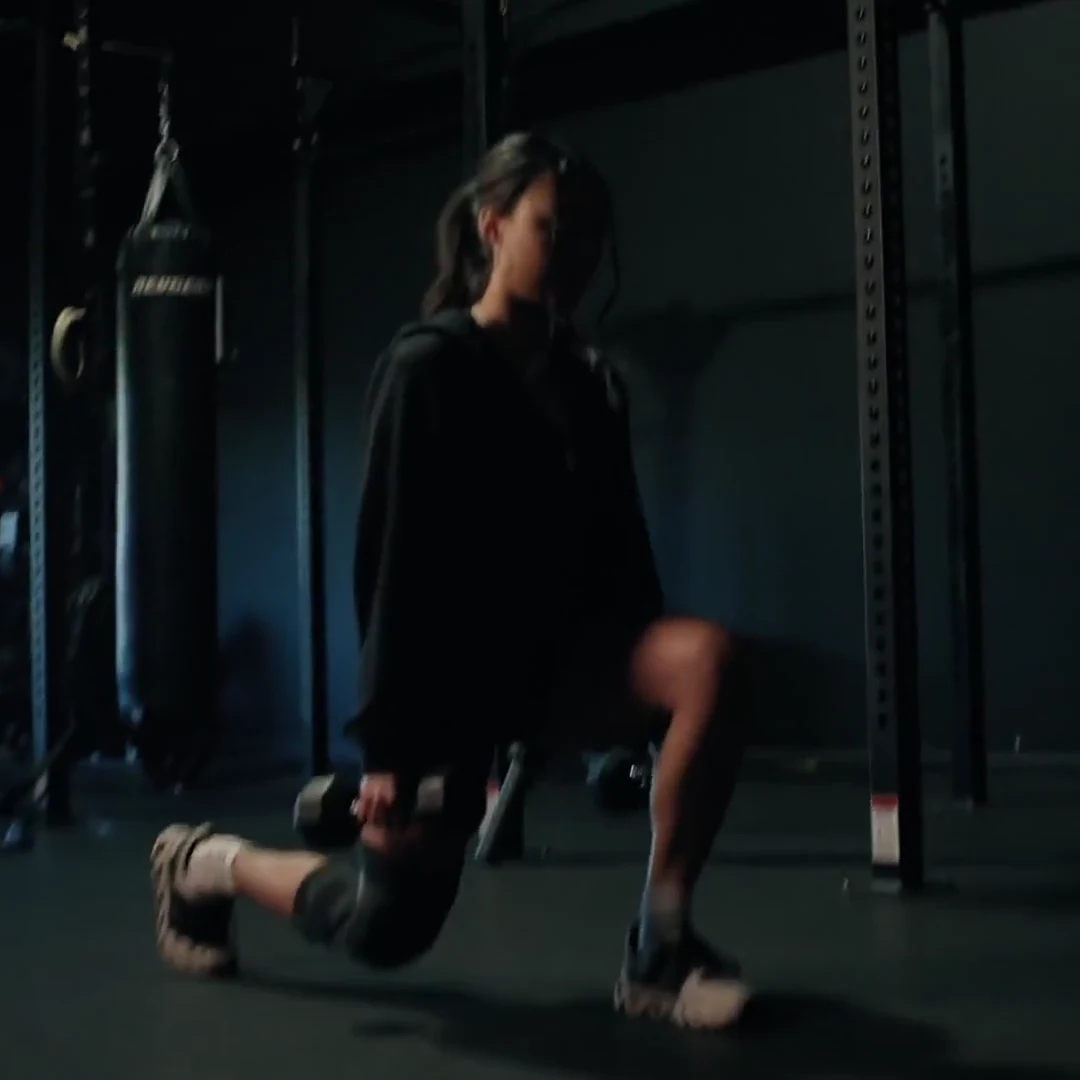
- Squat: sit back to a chair or box and stand up. Hold a dumbbell at your chest when it gets easy.
- Push: push-ups against a wall, bench, or the floor, or a dumbbell chest press.
- Pull: one-arm dumbbell rows or resistance-band rows.
- Hinge: glute bridges or dumbbell Romanian deadlifts, keeping your back flat.
- Carry or plank: walk holding heavy dumbbells at your sides, or hold a plank for 20 to 40 seconds.
How to run it:
- Weeks 1 and 2: 1 to 2 sets of 8 to 12 reps. Focus on form and full range of motion.
- Weeks 3 to 8: 2 to 3 sets of 8 to 12 reps. Rest 1 to 2 minutes between sets.
- Progress: when you can do 12 clean reps on every set, add a little weight. Stop each set with a rep or two left in the tank.
- After 8 weeks: add a third day if you're enjoying it. Heavier weights for fewer reps build strength fastest once your form is solid.
A five-minute walk or easy bike ride is a fine warm-up. Save longer cardio for after lifting or another day.
If you're losing weight on a GLP-1
Lifting matters even more when you're losing weight fast. It's the signal that tells your body to keep muscle while fat comes off.
- Eat before you train. Appetite is low on tirzepatide, so have a yogurt, a shake, or a small protein snack an hour or so before.
- Hit your protein. Aim for 80 to 120 grams a day. Our guide to how much protein to lose weight breaks it down.
- Hydrate. Less food means less water from food. Sip through the day.
- Ease off if you're dizzy. Rest, eat, drink, and tell your care team if it keeps happening.
For the full picture, read how to keep muscle on a GLP-1.
If you're on testosterone therapy
The same plan works. Testosterone therapy treats a diagnosed testosterone deficiency, and your clinician monitors it with regular labs. It isn't a shortcut, and it doesn't replace training.
If you're new to lifting, start with the beginner plan above, progress at the same steady pace, and keep your lab appointments. For what treatment itself looks like, read TRT online: what to expect.
Train safe
Some soreness a day or two after a new workout is normal. Sharp joint pain isn't. Stop that exercise and try an easier version.
If you have heart disease, high blood pressure, or joint problems, check with your clinician before you start.
How Nirvanix helps
Nirvanix gives you a real clinician, online, with no waiting room. If weight loss is your goal, Nx Lean pairs tirzepatide with a plan that adjusts as you go. If you're a man dealing with low testosterone, Nx Vitality starts with labs and a clinician who monitors your treatment. The consultation is included either way.
The bottom line
Two full-body strength sessions a week is enough to start getting stronger and to help protect your muscle while you lose weight. Keep it simple, add weight slowly, and stop each set with a rep or two to spare. Pair it with enough protein and the right care, and your results can look and feel better.
Ready to start? Take the two-minute quiz to see which plan fits you.
Common questions
How many days a week should a beginner lift weights?
Two days a week is the minimum US guidelines recommend, working all your major muscle groups. That's also enough to start getting stronger. Once it feels routine, you can add a third day.
Can I lose weight with strength training?
Strength training burns calories, but its real power during weight loss is helping you keep muscle while fat comes off. In one study, dieters who lifted lost less lean mass and got much stronger than dieters who only did cardio.
Should I do cardio or weights first?
If strength is your main goal, do your lifting first while you're fresh. Research shows strength gains improve when strength work comes at the start of a session. A short warm-up walk before lifting is fine.
Do I need a gym to start strength training?
No. Bodyweight moves, dumbbells, and resistance bands all work. A large review found that the type of equipment didn't consistently change results. What matters is working hard enough and adding challenge over time.
Is it safe to lift weights while on tirzepatide or TRT?
For most people, yes, and it's encouraged. On tirzepatide, eat something with protein beforehand and stay hydrated. On testosterone therapy, keep up with your lab checks. Ask your clinician if you have heart disease, joint problems, or other health conditions.